
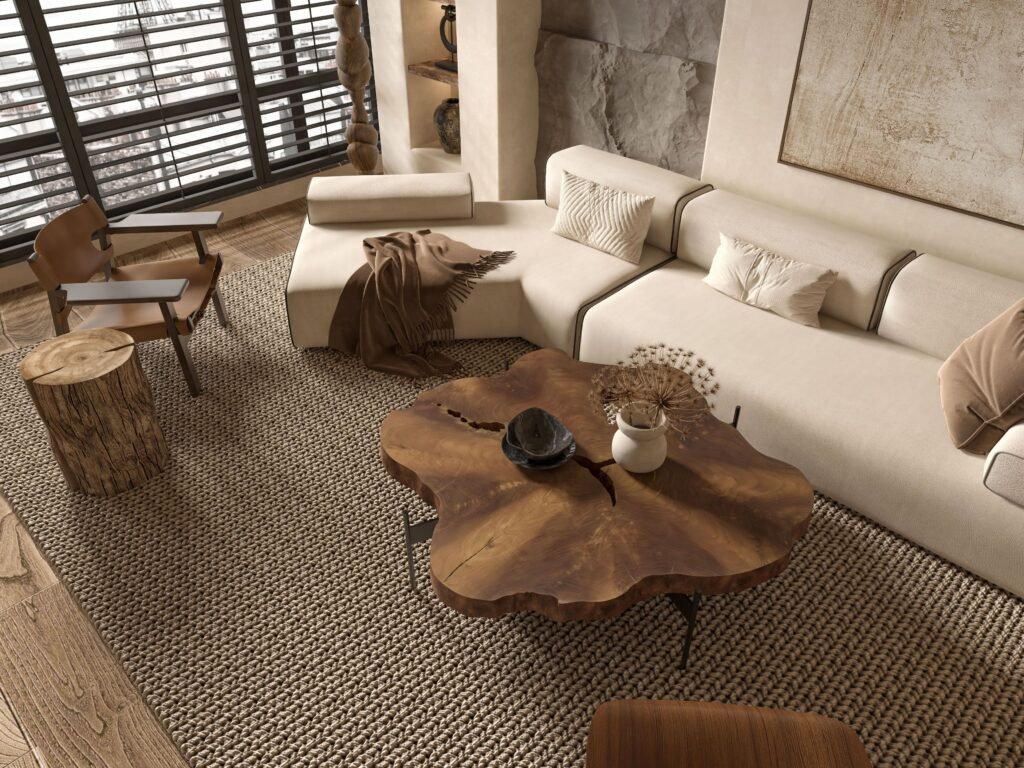
There’s a difference between a room that looks beautiful and a room that makes you want to stay.
The most inviting Mediterranean homes tend to have that second quality. Nothing feels too precious. Nothing looks overly matched. There’s usually a comfortable sofa, a beautiful old-looking wooden table, something woven, a little linen, and plenty of natural light.
It feels easy.
And that’s exactly what makes Mediterranean furniture so appealing.
You don’t need to turn your home into a Spanish villa or fill every room with rattan to get the feeling. Often, it comes down to choosing a few pieces that bring warmth, texture and character into the space.
Here’s how to get started.
1. Start With How You Want the Room to Feel
Before thinking about colors or trends, think about the feeling you want.
Do you want your living room to feel somewhere you can properly relax? Should your dining area feel welcoming enough for long lunches? Do you want your bedroom to feel calm rather than perfectly styled?
Mediterranean furniture works particularly well when comfort comes first.
Look for pieces that make you want to sit down rather than simply look at them.
A deep sofa. A generous armchair. A dining table that can comfortably fit a few extra people when dinner turns into a long evening.
The furniture should invite you in.
2. Choose Natural Materials First
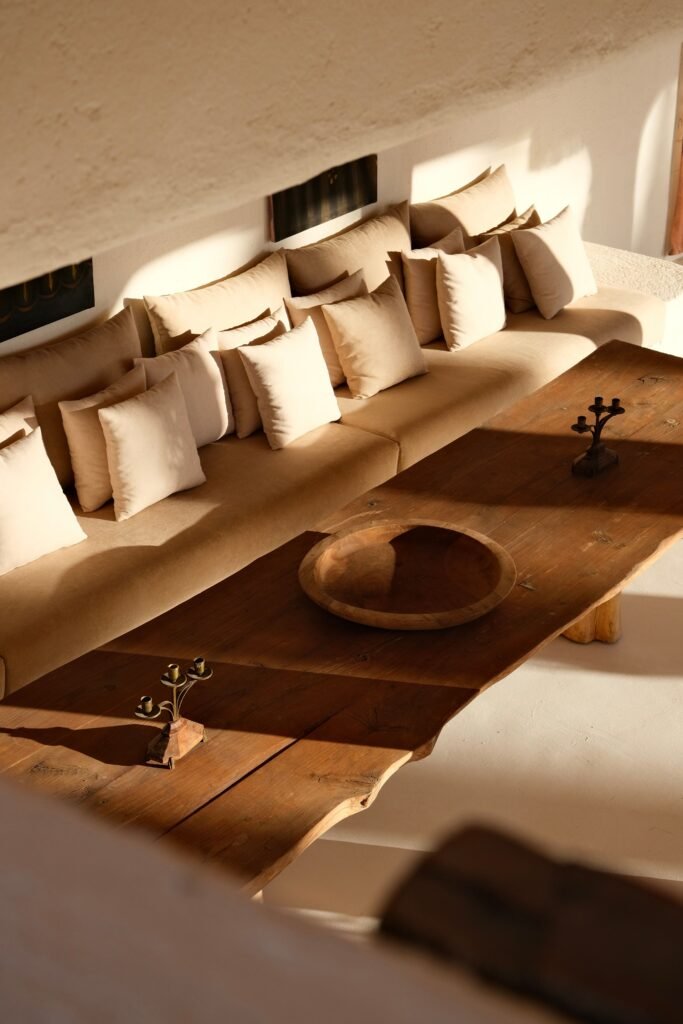
One of the easiest ways to create a Mediterranean feeling indoors is through the materials you choose.
Natural wood, linen, rattan, wicker, stone and ceramics all bring a certain warmth that synthetic materials often struggle to recreate.
You don’t need all of them.
In fact, using too many can make a room feel themed rather than natural.
A solid wood dining table with linen chairs might be enough.
Or a simple oak side table next to a soft linen sofa.
The beauty comes from the combination.
Natural materials are also part of what gives Mediterranean interiors their lived-in quality. Small variations, visible grain and subtle imperfections add character rather than taking away from it.
3. Don’t Be Afraid of Wood That Looks Like Wood
There’s something especially beautiful about furniture that doesn’t try too hard to look perfect.
A wooden table with visible grain.
A slightly uneven finish.
A warm oak cabinet.
A vintage-looking sideboard that feels as though it could have been there for years.
These pieces give a room a sense of history.
And you don’t necessarily need genuine antique furniture to achieve it.
Look for finishes that feel natural rather than heavily polished or artificially distressed.
The goal isn’t to make new furniture look old.
It’s to choose furniture with enough character that it doesn’t feel disposable.
4. Add One or Two Woven Pieces
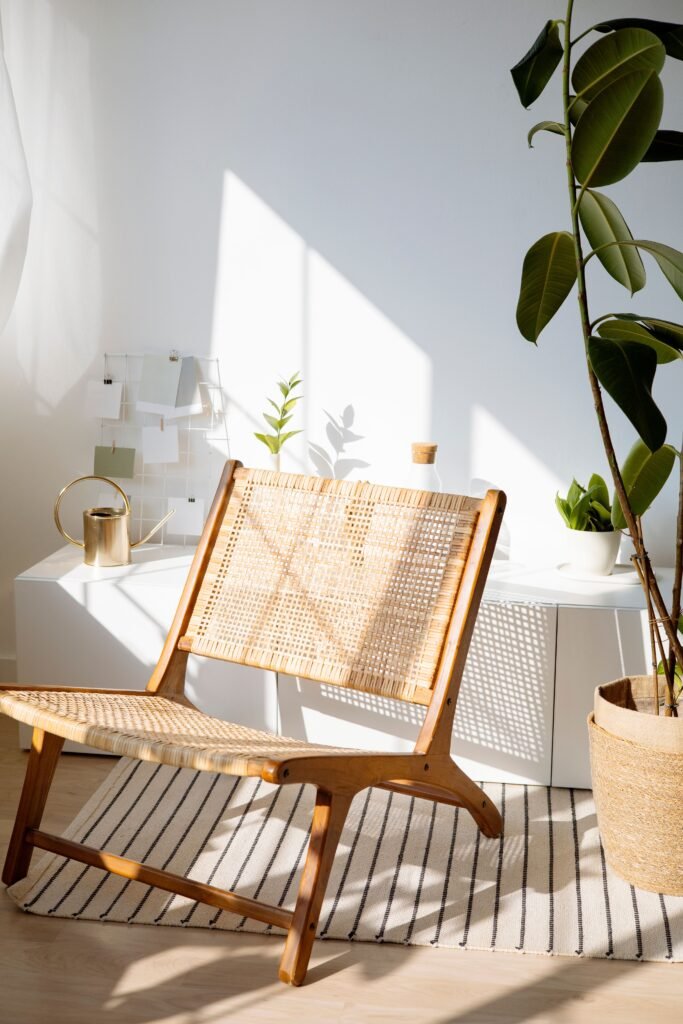
Rattan, wicker and other woven materials have a natural place in Mediterranean interiors.
A woven bench at the end of the bed.
They add texture without adding visual heaviness.
The trick is restraint.
One beautiful woven chair can have much more impact than an entire room filled with baskets, rattan lamps and wicker furniture.
Think of woven furniture as texture — not as a theme.
5. Keep Upholstery Soft and Relaxed
Mediterranean furniture rarely needs to look overly formal.
For sofas and armchairs, soft linen or linen-look upholstery works beautifully with warm wood and woven materials.
Choose colors that feel naturally connected to the Mediterranean landscape:
Warm white.
Cream.
Sand.
Stone.
Soft beige.
Muted olive.
Warm brown.
You can always add a little more color later with cushions, artwork or ceramics.
A calm foundation gives you much more freedom.
6. Look for Rounded, Comfortable Shapes
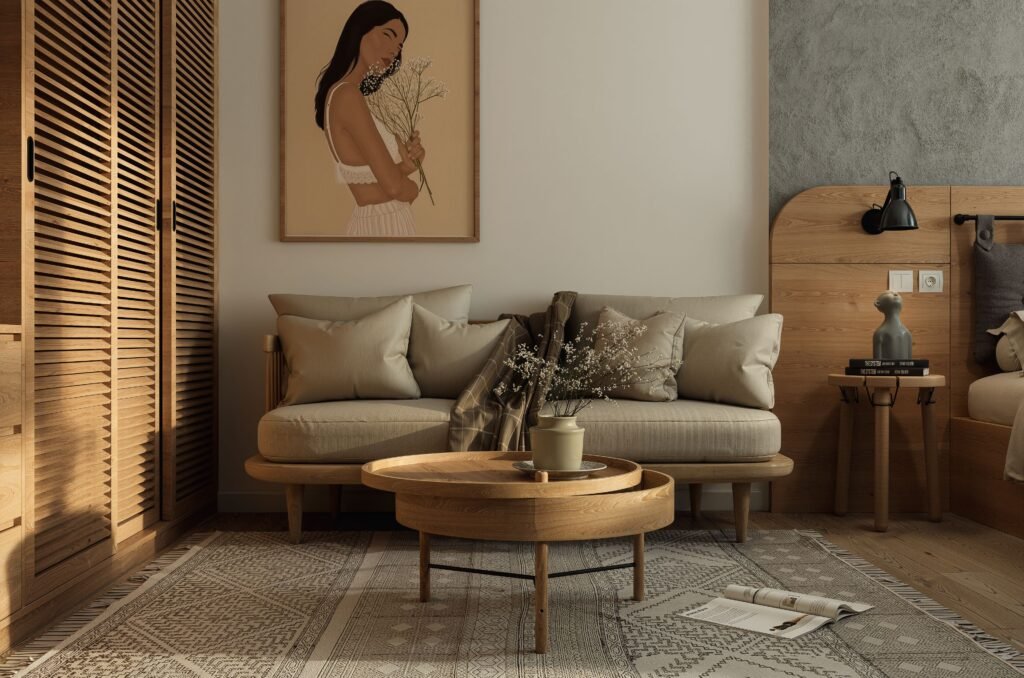
There is something naturally inviting about curved furniture.
A curved sofa.
These shapes can soften a room filled with straight architectural lines and make the furniture feel more relaxed.
You don’t need curves everywhere.
One or two softer shapes are often enough to make an otherwise simple room feel more considered.
7. Mix Old and New
This is one of my favorite ways to make Mediterranean furniture feel authentic.
Don’t buy everything from the same collection.
Instead, let different pieces have different personalities.
A contemporary linen sofa can sit beautifully beside an older wooden side table.
A modern dining table can work with vintage-inspired chairs.
A simple new armchair can look even better next to a handmade ceramic lamp.
This is what stops a room from feeling like a showroom.
The result feels collected rather than coordinated.
8. Let the Furniture Breathe
Mediterranean interiors don’t need to be packed with furniture.
If anything, leaving a little space around your pieces can make them feel more beautiful.
A large wooden table needs room around it.
A beautiful armchair doesn’t need to be surrounded by accessories.
A sofa can stand on its own.
Think about how people will actually move through the room.
You want the space to feel generous, relaxed and easy.
9. Don’t Forget the Light
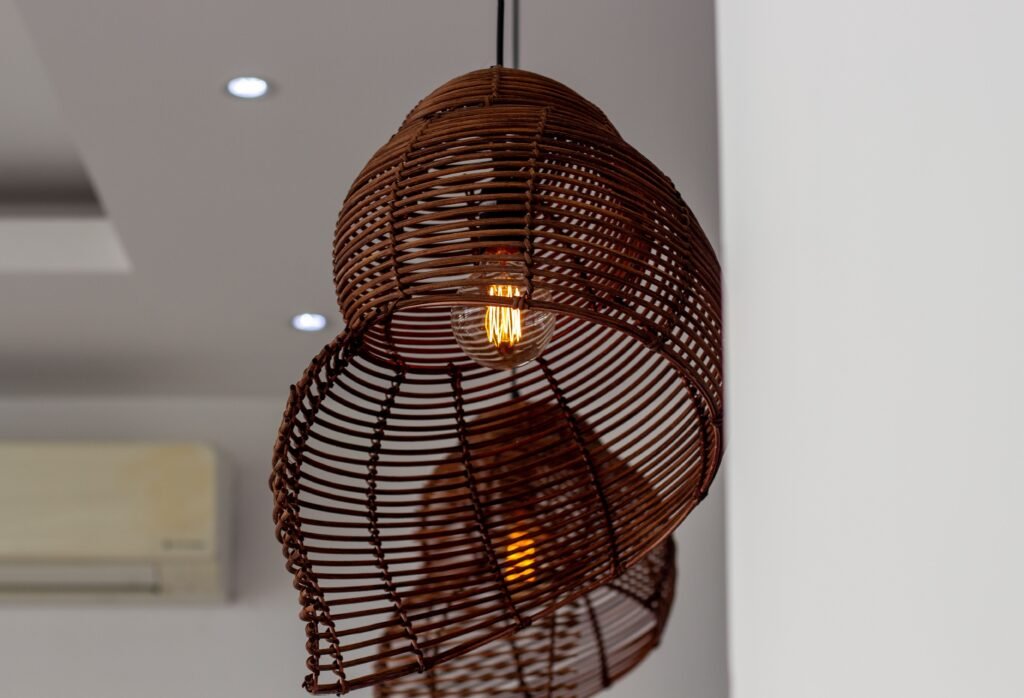
Furniture always looks different depending on the light around it.
Natural Mediterranean interiors often make beautiful use of sunlight, pale walls and natural textures, allowing materials to do much of the decorating.
Place furniture where it can benefit from natural light.
Let linen curtains soften the windows rather than block them completely.
And in the evening, use warm lamps instead of relying entirely on one bright ceiling light.
A beautiful wooden chair in soft afternoon light will often do more for a room than another ten decorative objects.
10. Choose Fewer Pieces — But Make Them Count
You don’t need a whole new room.
Sometimes one good piece can change everything.
A beautiful dining table.
A comfortable linen sofa.
A sculptural wooden coffee table.
A relaxed rattan chair.
Start there.
Then let the rest of the room develop slowly around it.
That usually creates a much more personal home than buying everything at once.
Creating a Mediterranean Home Without Making It Feel Themed
This is probably the most important part.
You don’t need blue-and-white cushions, seashells or nautical accessories to make a room feel Mediterranean.
You don’t even need a traditionally Mediterranean house.
The feeling comes from the combination of natural materials, warm light, relaxed furniture, comfortable proportions and a little imperfection.
Think less about decorating in a Mediterranean style and more about creating a home that feels warm, natural and easy to live in.
That’s where the real beauty is.
The Altea Villa Vibes Approach
For us, Mediterranean furniture is never really about recreating a holiday home.
It’s about bringing a little of that feeling into everyday life.
A home where the sofa is actually comfortable.
A dining table that gets used every day.
A wooden chair that gets better with age.
A room that doesn’t need to be perfect before you can enjoy it.
That’s the kind of Mediterranean living we love.
Less polished. More personal. And always made for living.